
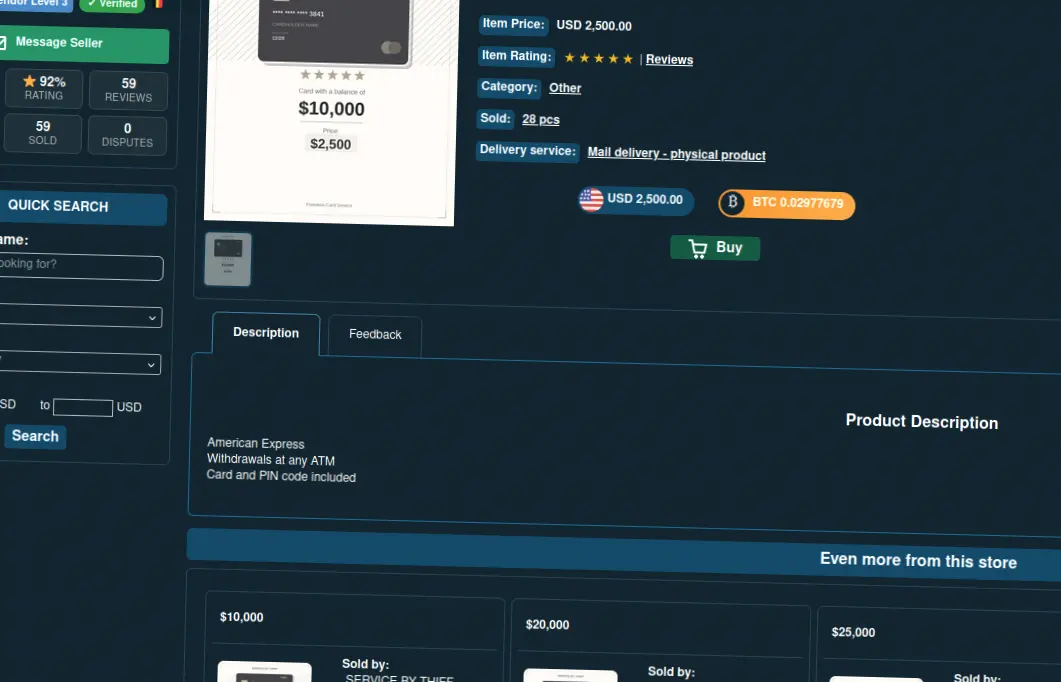
Believing he had found an easy method to make money, Mark T., a 34-year-old resident of Tampa Bay, acquired six cloned debit cards for $480 in cryptocurrency in November 2024. In November 2024, he spent $480 on six counterfeit debit cards and their corresponding PINs from a darknet site. These cards had information from magnetic stripes that was unlawfully associated with actual bank accounts. After successfully withdrawing $4,200 from the first three ATMs he visited, his luck changed when he was caught at the fourth ATM. This incident illustrates how physical traces at ATMs can lead to digital forensic investigations. A five-year prison sentence was imposed in March 2025 after law enforcement traced his cryptocurrency wallet within 72 hours.
The Carding Chain: From Skimming to Cash-Out
One of the most enduring forms of cybercrime remains carding, with Mark's method following a familiar pattern. The operation typically begins with skimming, where criminals utilize devices to capture magnetic track data from ATMs, shimmer devices, or phishing schemes. Alternatively, they purchase dumps on darknet forums, where topics concerning credit card skimmer protection or discussions on card skimming are prevalent.
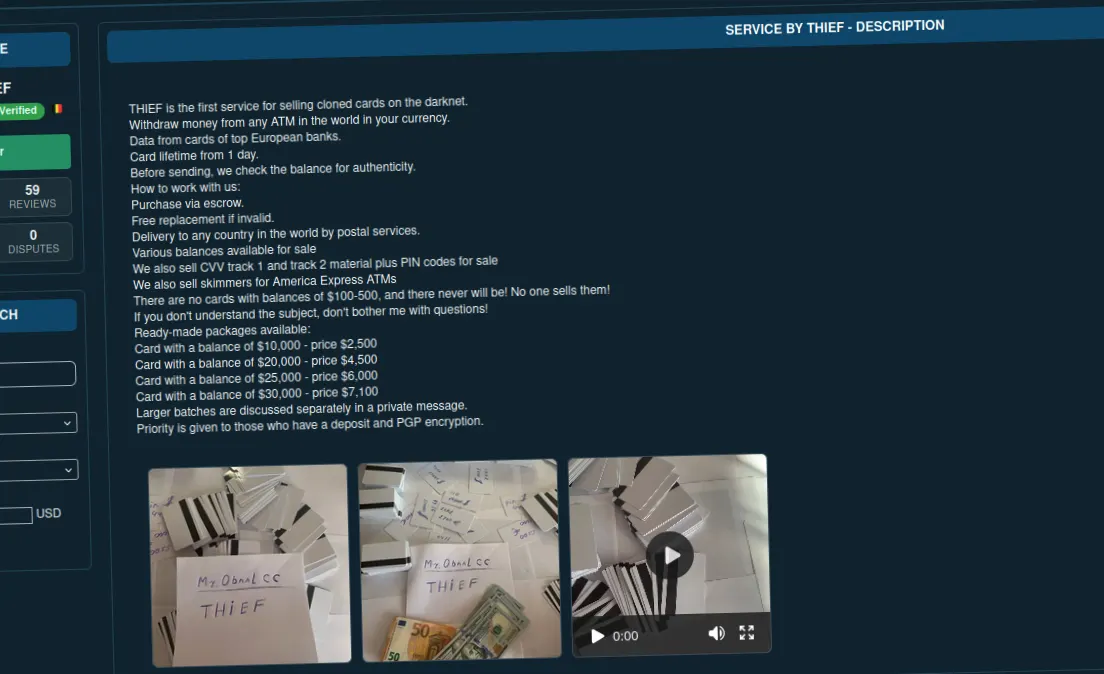
After obtaining the data, it is embossed onto blank plastic to create a card that appears legitimate, including its name, expiration date, and card number. A ready-to-use instrument is acquired by the buyer if the PIN has also been compromised through methods like an overlay keypad or hidden camera. The next step is cash-out: withdrawing funds before victims notice and block their cards. Finally, the money is laundered through Bitcoin ATMs or P2P exchanges to obscure the trail.
Mark’s transaction was simple: six cloned cards with PINs, purchased in Monero due to its anonymity. The cards came in unmarked packaging, and the first three withdrawals totaled $4,200. Yet, ATMs serve more than just dispensing cash—they are centers for evidence collection. Hidden cameras, transaction records, and geolocation data transform each withdrawal into a possible lead. For those curious about identifying a skimmer on a card reader, images of ATM skimmers often show subtle alterations, but Mark’s error was not the skimmer—it was the camera.
The Camera: The Weak Link in the Chain
Modern ATMs play a vital role in security and monitoring systems. Generally, these machines are equipped with high-definition cameras capable of recording video at a resolution of 1080p, along with infrared capabilities for visibility in low-light situations. Additionally, concealed cameras are installed to provide diverse angles of the vicinity. Transaction logs carefully document the exact time, amount, card number, and specific machine identifiers, while geolocation tools pinpoint the ATM's precise location. Network logs offer additional details concerning transaction requests and their metadata.
Upon the reporting of unauthorized withdrawals by individuals from Florida, Georgia, and North Carolina, their banks swiftly took action to block the compromised cards and began an investigation. This led the bank's fraud detection systems to reveal a concerning trend: cloned cards were being utilized across various states. The U.S. Secret Service got involved, requesting access to ATM transaction logs and pertinent video footage. Through thorough investigation, authorities managed to identify Mark by matching his photo from the Florida Department of Public Safety database. It was revealed through further investigation that all unauthorized transactions occurred in the vicinity of Mark's residence, specifically within a 40-mile radius.
On Day 12, authorities secured a warrant to investigate Mark's digital footprint, which encompassed his browsing history, ISP logs, and activity within his cryptocurrency wallet. The investigation into his Monero wallet traced purchases back to a darknet marketplace. At Mark's home, on Day 14, the execution of a search warrant led to the discovery of six blank plastic cards, a device for reading and writing magnetic stripes, a laptop with evidence of illegal online activity, and $3,200 in cash. Mark was arrested the following day. While being interrogated, it was revealed that four out of the six cards had been used by him for cash withdrawals, with the banks having already blocked the remaining two cards.
Why Crypto Couldn’t Save Him
Mark acquired counterfeit cards through the use of Monero, a cryptocurrency recognized for its privacy features. Nonetheless, law enforcement successfully established a direct connection to him. The investigation revealed three significant issues: the location of the purchase, the timeline of events, and concrete physical proof.
Initially, Monero was purchased from a centralized exchange that required KYC (Know Your Customer) verification, compelling Mark to submit both a passport and a selfie. Following a legal directive, this exchange shared his identity along with the transaction information. While Monero's blockchain provides a degree of anonymity, the original purchase was still traceable. The timeline also raised concerns: the buying of Monero, the subsequent card transactions, and ATM withdrawals all unfolded within a mere two weeks. This rapid sequence resulted in compelling circumstantial evidence. Furthermore, the counterfeit cards retrieved during the investigation were directly correlated to the compromised data through their magnetic strips.
The most damning evidence came from the ATM surveillance footage. A face captured on video serves as undeniable proof; irrespective of how well other elements were hidden, this footage alone linked Mark to the crime scene. This case serves as a reminder for those attempting to escape credit card fraud: ATMs are designed to catch criminals rather than facilitate their schemes.
The Numbers Don’t Lie
Mark's operation, though not vast, proved unexpectedly successful. Below are the exact figures detailing his activities:
The total number of ATM withdrawals amounted to 4, while the amount withdrawn reached $4,900. |-----------------------------------|-------------| The number of ATM withdrawals recorded is 4. The amount withdrawn totaled $4,900. The cost associated with cloned cards is $480. The period between the withdrawal and the arrest is 15 days. A federal prison sentence of 60 months has been imposed. A total of $22,000 is the amount for fines and restitution. | Duration of supervised release | 3 years |
His approach had distinct weaknesses: he limited his withdrawals to a small area, neglected to use a disguise, relied on a KYC-compliant exchange for Monero, stored evidence at home, and acted with undue haste. Fraud detection systems quickly picked up on these behaviors, and surveillance footage verified his identity.
Lessons for Security Teams
Mark's predicament showcases the real-world operation of security measures, offering revelations that might astonish those engaged in card cloning. Cybersecurity professionals can derive several key takeaways from this incident.
First and foremost, anti-fraud systems act as a vital defense. Mechanisms like pattern analysis, geolocation parameters, and algorithmic ratings function autonomously, often reducing the need for human intervention. Financial institutions are advised to continue refining their machine learning capabilities to better spot anomalies.
In addition, integrating physical and digital investigative techniques is essential. While ATM surveillance footage can be instrumental, it lacks effectiveness without the matching transaction data to pinpoint the exact timing of the incident. The combination of these two aspects is crucial for any comprehensive inquiry.
Furthermore, the notion of complete anonymity with cryptocurrencies is a misconception. Entry points (KYC exchanges) and exit points (cash withdrawals) create a traceable link between the digital and physical realms. Given the existence of KYC procedures, attaining total anonymity is impractical.
Moreover, the level of education given to clients remains a notable vulnerability. When fraud victims report incidents promptly, banks can swiftly disable cards, thereby reducing potential damages. Educational efforts from financial institutions can greatly lessen the opportunities for fraudsters to exploit weaknesses.
For those exploring carding forums or engaging in discussions regarding card cloning, it is crucial to understand that the person handling the cash carries the most significant risk. The masterminds usually stay hidden, leaving the buyers to face the repercussions. In Mark's instance, this led to a term of 60 months in federal prison.
The Verdict: A Final Link in the Chain
In March 2025, Mark T. acknowledged his involvement in fraudulent activities and money laundering, specifically referenced in 18 U.S.C. § 1029 and § 1957. A prison term of 60 months was handed down by the federal court in Florida, accompanied by a three-year supervised release. A fine of $22,000 was imposed on him, along with a requirement to provide restitution to the victims affected by his actions. Although not the mastermind behind the fraudulent operation, Mark played a vital role and ultimately faced serious consequences for his involvement.
This situation emphasizes an important point about cybercrime: the most elaborate operations can be unraveled when there is enough evidence. Individuals contemplating similar illegal endeavors should be aware of the ongoing surveillance. For those in the security sector, this illustrates the necessity of establishing comprehensive safeguards, which may include measures against credit card fraud and careful oversight of transactions. Remaining vigilant is crucial to avoid becoming a victim of such unlawful schemes.
Mark’s cloned cards originated from a darknet marketplace, specifically **the website where the purchase was made**.
Further services. We keep a short list of services we check regularly. Tor mirrors